

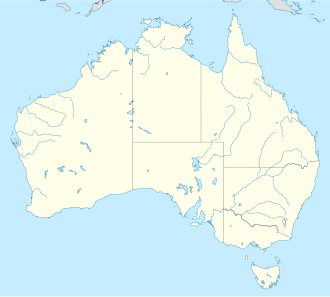
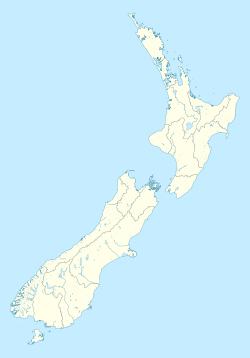
Australia and New Zealand were awarded the hosting rights in January 1989, defeating a joint India-Pakistan bid after those two nations had hosted the preceding 1987 World Cup. The Australia–New Zealand bid proposed that the tournament be held in February and March 1992, at the end of the local cricket season, while the India–Pakistan bid would have seen the tournament held in late 1991. The seven full members of the ICC were given two votes each in the ballot, while the 18 associate members were given one vote each. The results of the ballot were not released, but the winning bid reportedly enjoyed strong support from the ICC associate members.
The 1992 World Cup was the first to feature coloured player clothing, white cricket balls and black sight screens, with a number of matches being played under floodlights. It was also the first Cricket World Cup to be held in the Southern Hemisphere, and the first to include South Africa, who had been allowed to re-join the International Cricket Council as a Test-playing nation after the end of apartheid in 1990. For the first time, the World Cup was not held after a four-year gap, but after a five-year gap.
The format was changed from previous tournaments, with a complete round-robin replacing the former two qualifying groups. The initial draw was released with eight competing countries and 28 round-robin matches, plus two semi-finals and a final. In late 1991, South Africa were re-admitted to the International Cricket Council after 21 years of exclusion due to apartheid, and the draw was amended to include them, adding another eight matches to the round-robin. The rule for calculating the target score for the team batting second in rain-affected matches was also changed. The previous rule (the Average Run Rate method) simply multiplied the run rate of the team batting first by the number of overs available to the team batting second, but this rule had been deemed to give an unfair advantage to the team batting second. In an attempt to rectify this, the target score would now be calculated by the Most Productive Overs method. In this system, if the team batting second had 44 overs available, their target score would be one greater than the 44 highest scoring overs of the team batting first. While the reasoning behind the system seemed plausible, the timing of rain interruptions remained problematic: as the semi-final between England and South Africa demonstrated, where a difficult but eminently reachable 23 runs off 13 balls was reduced to 23 runs off 7 (the least productive over, a maiden, being deducted) and finally, a preposterous 22 off 1 ball (the next least productive over having given 1 run). It was seen that, if the interruption came during the second innings, the side batting second was at a significant disadvantage – one which was only overcome once, in fact, in England's group-stage victory over South Africa. The farcical end to the semi-final led to the creation of the Duckworth-Lewis method.
The 1992 World Cup featured the seven Test teams at that time. For the first time, South Africa competed as the eighth full member of the ICC, and would play their first Test in 22 years in the West Indies a month after the World Cup. Zimbabwe appeared for the third time, having qualified by winning the 1990 ICC Trophy defeating the Netherlands in the final for the second time. Zimbabwe would gain full member status following the tournament and play their first Test match later in 1992. Teams who entered were:
| Full Members |
| Australia |
| England |
| India |
| New Zealand |
| Pakistan |
| South Africa |
| Sri Lanka |
| West Indies |
| Associate Member |
| Zimbabwe |
Eleven umpires were selected to officiate at the World Cup: two from each of the host nations and one from each of the other participating nations. West Indies' Steve Bucknor and England's David Shepherd were chosen as the umpires for the first semi-final, while New Zealand's Brian Aldridge and Australia's Steve Randell were chosen for the second. Bucknor and Aldridge were chosen for the final.
| Umpire | Country | Matches |
| Steve Bucknor | West Indies | 9 |
| Brian Aldridge | New Zealand | 9 |
| David Shepherd | England | 8 |
| Steve Randell | Australia | 8 |
| Khizer Hayat | Pakistan | 7 |
| Piloo Reporter | India | 7 |
| Dooland Buultjens | Sri Lanka | 6 |
| Peter McConnell | Australia | 6 |
| Steve Woodward | New Zealand | 6 |
| Ian Robinson | Zimbabwe | 6 |
| Karl Liebenberg | South Africa | 6 |
Two match referees were also selected to supervise the semi-finals and final. Australia's Peter Burge supervised the first semi-final and the final, while New Zealand's Frank Cameron supervised the second semi-final.
| Referee | Country | Matches |
| Peter Burge | Australia | 2 |
| Frank Cameron | New Zealand | 1 |
Co-hosts New Zealand proved the surprise package of the tournament, winning their first seven consecutive games to finish on top of the table after the round-robin. The other hosts, Australia, one of the pre-tournament favourites lost their first two matches. They recovered somewhat to win four of the remaining six, but narrowly missed out on the semi-finals. The West Indies also finished with a 4–4 record, but were just behind Australia on run-rate. South Africa made a triumphant return to international cricket with a win over Australia at the Sydney Cricket Ground in their first match. They and England had solid campaigns and easily qualified for the semis, despite upset losses to Sri Lanka and Zimbabwe respectively. India had a disappointing tournament and never looked likely to progress beyond the round-robin. Sri Lanka were still establishing themselves at the highest level and beat only Zimbabwe (who did not yet have Test status) and South Africa. New Zealand were defeated only twice in the tournament. Both losses were to champions Pakistan, once in the group stage and the second in the semi-final.
The match was initially reduced to 20 overs a side due to rain. A helicopter was used to dry the pitch but as play began, it rained again and the match was abandoned. West Indies and Zimbabwe would next play in Brisbane in 2001 Rain interrupted play after 16.2 overs in the Indian innings (45/1). India's target recalculated to 236 off 47 overs. Rain commenced at lunch with England 17/1 after six overs. Only two further overs were possible after lunch, with England chasing a revised target of 64 off 16 overs and then 63 off 15 overs. With fewer than 15 overs being batted by England, no result was declared. New Zealand innings interrupted at 9/1 (2.1 overs). Match reduced to 35 overs per side. Further interruption at 52/2 (11.2 ov). Match reduced to 24 overs per side. Innings ended by a third interruption after 20.5 overs. Zimbabwe set a target of 154 from 18 overs. Match reduced to 49 overs per side due to a slow over rate by Pakistan. After rain forced the game of 32 overs per side, Rain came again at 19.1 over in ZIM Innings thus target was recalculated to 159 runs in the 19 overs. This was Malcolm Marshall's last ODI. When Pakistan was 74/2 after 21.3 overs, rain halted the play for an hour and the target was revised to 194 in 36 overs. Rain came in 11th over of WI's Innings and the Revised Target became 195 in 46 Overs Rain disrupted play in England's innings for 43 minutes when they were 62/0 after 12.0 overs. The target was revised to 226 in 41 overs. Rain stopped play with Australia 72/1 after 15 overs. Match reduced to 46 overs per side. Rain reduced the match to 30 overs per side. , Krishnamachari Srikkanth played his final ODI game.
| 22 February 1992 Scorecard |
| New Zealand 248/6 (50 overs) | v | Australia211 (48.1 overs) |
| Martin Crowe 100* (134) Craig McDermott 2/43 (10 overs) | David Boon 100 (133) Gavin Larsen 3/30 (10 overs) |
| New Zealand won by 37 runs Eden Park, Auckland Umpires: Khizer Hayat and David Shepherd Player of the match: Martin Crowe (NZ) |
| 22 February 1992 Scorecard |
| England 236/9 (50 overs) | v | India227 (49.2 overs) |
| Robin Smith 91 (108) Manoj Prabhakar 2/34 (10 overs) | Ravi Shastri 57 (112) Dermot Reeve 3/38 (6 overs) |
| England won by 9 runs WACA Ground, Perth Umpires: Dooland Buultjens and Peter McConnell Player of the match: Ian Botham (Eng) |
| 23 February 1992 Scorecard |
| Zimbabwe 312/4 (50 overs) | v | Sri Lanka313/7 (49.2 overs) |
| Andy Flower 115* (152) Pramodya Wickramasinghe 2/50 (10 overs) | Arjuna Ranatunga 88* (61) Eddo Brandes 3/70 (10 overs) |
| Sri Lanka won by 3 wickets Pukekura Park, New Plymouth Umpires: Piloo Reporter and Steve Woodward Player of the match: Andy Flower (Zim) |
| 23 February 1992 Scorecard |
| Pakistan 220/2 (50 overs) | v | West Indies221/0 (46.5 overs) |
| Rameez Raja 102* (158) Roger Harper 1/33 (10 overs) | Desmond Haynes 93* (144) Wasim Akram 0/37 (10 overs) |
| West Indies won by 10 wickets Melbourne Cricket Ground, Melbourne Umpires: Steve Randell and Ian Robinson Player of the match: Brian Lara (WI) |
| 25 February 1992 Scorecard |
| Sri Lanka 206/9 (50 overs) | v | New Zealand210/4 (48.2 overs) |
| Roshan Mahanama 80 (131) Willie Watson 3/37 (10 overs) | Ken Rutherford 65* (71) Ruwan Kalpage 2/33 (10 overs) |
| New Zealand won by 6 wickets Seddon Park, Hamilton Umpires: Piloo Reporter and David Shepherd Player of the match: Ken Rutherford (NZ) |
| 26 February 1992 Scorecard |
| Australia 170/9 (49 overs) | v | South Africa171/1 (46.5 overs) |
| David Boon 27 (31) Allan Donald 3/34 (10 overs) | Kepler Wessels 81* (148) Peter Taylor 1/32 (10 overs) |
In the first semi-final, Pakistan defeated tournament favourites New Zealand in a high-scoring match to win their first semi-final in four attempts and book a place in the World Cup Final for the first time. New Zealand batted first and scored 262. Their captain Martin Crowe was injured while scoring 91, and opted to let John Wright captain during Pakistan's innings rather than risk aggravating the injury, which was seen as a mistake in hindsight. When Inzamam-ul-Haq came in to bat, Pakistan still needed 123 from 15 overs. He smashed 60 runs in 37 balls in the chase to achieve the target with one over remaining and also won the Man of the Match award. In the second semi-final between South Africa and England, the match ended in controversial circumstances when, after a 10-minute rain delay, the most productive overs method revised South Africa's target from 23 runs from 13 balls to an impossible 22 runs from one ball. This rule was replaced for One Day International matches in Australia after the World Cup as a result of this incident, and it was eventually superseded by the Duckworth–Lewis method for the 1999 World Cup onwards. According to the late Bill Frindall, had the Duckworth–Lewis method been applied at that rain interruption, the revised target would have been four runs to tie or five to win from the final ball. The Duckworth-Lewis method would also have changed the target earlier in the day, due to earlier rain interruptions.
New Zealand won the toss and elected to bat. , Pakistan qualified for the final for the first time. South Africa won the toss and elected to field. , Rain interrupted play before the last ball of the 43rd over. South Africa then required 22 runs off 13 balls for victory. With 2 overs lost due to rain, the target was reduced to 21 runs from only 1 ball, using the Most Productive Overs method. , South Africa's deliberately slow over rate caused both teams to lose 5 overs in their innings. , The SCG scoreboard and the TV coverage incorrectly displayed South Africa needing 22 off 7 balls, then 22 off 1 ball - the actual requirement to win was 21 off 1 ball , A Duckworth/Lewis calculation under the rules in 2006 would have first set South Africa a target of 273 in 45 overs, and then reduced this to 257 from 43 overs.[nb 1] , England qualified for the final for the third time after 1979 and 1987.
Pakistan won the toss and elected to bat. , This was Imran Khan's last ODI. In a thrilling final, Pakistan beat England by 22 runs at the Melbourne Cricket Ground (MCG). Derek Pringle took two early wickets for England before Imran Khan and Javed Miandad added 139 for the third wicket to steady the Pakistan innings – although both were very slow to score early on, and Imran benefited from a dropped catch just as he was trying to increase the tempo, having up to that point scored only 9 in 16 overs. He went on to score 72. At the 25 over mark, Pakistan had only scored 70, but accelerated the score to 139 by the 31st over as Javed Miandad summoned a runner, and he and Imran Khan built a steady partnership. During his innings, Imran hit a huge six off Richard Illingworth that landed far back into the members section. Imran played a captain's innings, getting a score of 72 and Miandad 58 to steady the innings, expectedly followed by an onslaught from Inzamam (42) and Wasim Akram (33) enabling Pakistan to give England a fighting target of 250. England's start was shaky. Ian Botham was dismissed for a duck by Wasim Akram, followed by Alec Stewart, Hick and Gooch, which left England tumbling at 69/4. A solid partnership of 71 between Allan Lamb and Neil Fairbrother caused Imran to give an early second spell to his main pacer Wasim Akram in the 35th over. The decision wrote the fate of the match. Two deliveries from the left arm fast bowler dismissed Allan Lamb and Chris Lewis. Soon Fairbrother was caught by Moin Khan off Aaqib Javed to seal England's fate. Imran Khan had the final say, when he had Richard Illingworth caught by Ramiz Raja off his bowling to finish the final and crown Pakistan World Champions. This also remains as the only World Cup Final to be played during the week, being played on a Wednesday.
A notable feature of this World Cup was the innovative tactics employed by New Zealand captain Martin Crowe, who opened his team's bowling with spin bowler Dipak Patel, rather than with a fast bowler, as is usual practice. Another innovation was the then-unorthodox ploy of opening the batting with "pinch hitters", such as New Zealand's Mark Greatbatch. These innovations reversed the immediate prior form of New Zealand who had lost 3–0 in their most recent series against England, with one commentator writing, "Without a host of world-class performers, New Zealand got crafty instead".
তথ্যসূত্র: Wikipedia